Coffee Fundamentals
How Coffee Freshness Changes the Way You Brew
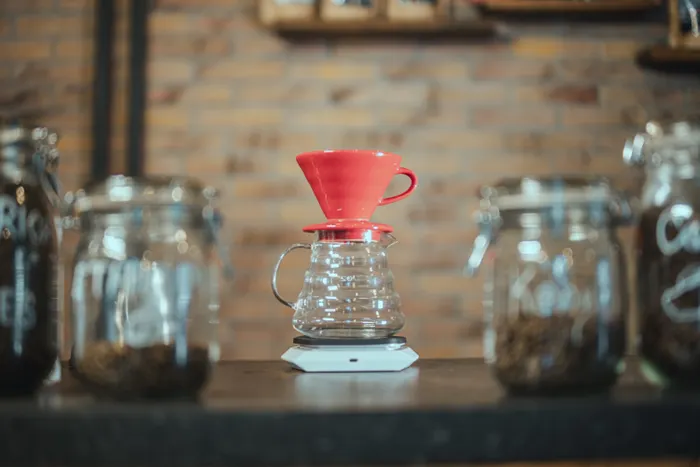
Coffee begins changing as soon as it is roasted and changes faster after it is ground. That does not mean beans become useless on a particular day, and it does not justify treating every package like a countdown timer. Freshness is better understood as one variable that affects aroma, gas release, extraction, and the adjustments a brewer may need.
Recently roasted beans contain trapped carbon dioxide. During brewing, that gas can push water away from coffee particles and create visible bubbling, especially in pour-over methods. A short initial wetting period gives gas time to escape before the main pour. Coffee with less gas may need little visible blooming, but it can still brew well. Foam is not a direct measurement of flavor or quality.
Whole beans generally preserve aroma longer than ground coffee because less surface area is exposed to air. Grinding immediately before brewing gives the user more control, but preground coffee can still make a satisfying cup when stored carefully and used consistently. The practical question is not whether the coffee meets an abstract freshness ideal. It is whether its current behavior is understood well enough to brew predictably.
Use sensory signs. A sealed bag may release a strong aroma when first opened, while an older bag can smell muted. During brewing, newer coffee may expand and bubble more. In the cup, age often appears as reduced aromatic complexity or a flatter impression rather than instant spoilage. An unpleasant rancid or stale odor is a clearer reason to replace coffee than the calendar alone.
Adjust one brewing variable at a time as a bag changes. If the same recipe begins tasting hollow or thin, a slightly finer grind or a little more coffee may restore balance. If very fresh coffee drains unpredictably in a pour-over, extend the initial wetting and pour more gently. Keep water amount and temperature stable while testing the change so the result remains understandable.
Storage slows exposure to air, heat, moisture, and strong odors. Keep beans in an opaque, tightly closed container in a cool cabinet away from the oven or sunny window. Repeatedly opening a large container introduces fresh air, so households that buy more coffee than they use quickly can divide it into smaller portions. Freezing can be useful for sealed portions stored longer, but condensation is a concern when cold beans are repeatedly opened and returned.
Package dates and recommendations vary among roasters. Use them as guidance rather than universal law. Buy an amount that matches household consumption, note when the bag was opened, and observe how the recipe behaves over time. Freshness becomes manageable when it informs small brewing adjustments instead of functioning as a pass-or-fail label.
One useful exercise is to brew the same coffee on the day a bag is opened and again near its end. Keep the recipe unchanged and compare aroma, bloom, drawdown, and flavor. Then make only the adjustment that current behavior supports. This simple comparison teaches more about freshness than memorizing a universal peak window, and the notes remain relevant to the household's storage and pace.