Troubleshooting Flavor
Why Coffee Tastes Sour and How to Correct It
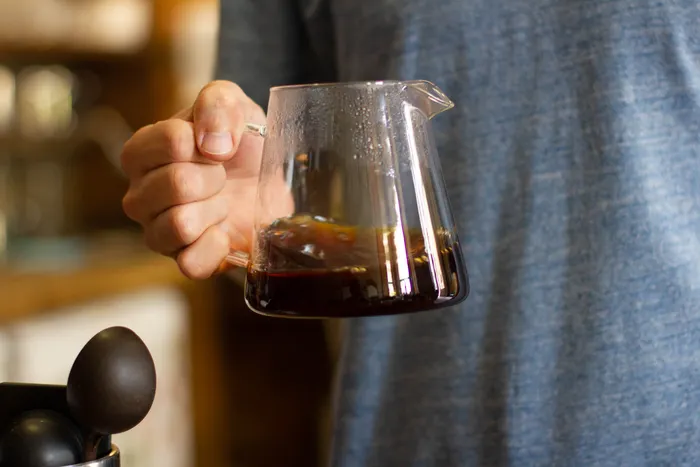
Sour coffee often points to under-extraction: water did not dissolve enough of the coffee's balancing compounds before brewing ended. However, some coffees are intentionally bright or fruit-forward, and “sour” can also describe a personal dislike of acidity. A good correction begins by distinguishing a sharp, unfinished cup from a balanced coffee whose style is not preferred.
Taste as the cup cools. Under-extracted coffee may seem thin, salty, sharply tart, or hollow, with a short finish. Pleasant acidity is more integrated and may resemble ripe fruit rather than vinegar or unripe citrus. Compare the result with the roaster's broad description, but do not assume the label guarantees a particular note.
Grind finer as the first controlled test when brew time or flow appears too fast. Smaller particles expose more surface and slow percolation. Move only one or two grinder steps and keep coffee, water, temperature, and technique unchanged. For immersion methods, extending contact time slightly can serve a similar purpose. Record the result.
Use enough heat. Water that is substantially too cool can struggle to extract a light or dense coffee, especially when the brewer and carafe absorb heat. Preheat equipment and use a repeatable heating routine. Darker roasts may not need the same heat, so adjust modestly rather than assuming maximum temperature is always better.
Check wetting and flow. Dry pockets in a pour-over, channeling in espresso, or floating clumps in immersion create uneven extraction. Saturate grounds completely, distribute espresso evenly, and pour with controlled agitation. A longer total time does not guarantee success if much of the water bypasses the coffee.
Review the ratio after grind and technique. Too little water for the coffee dose can produce a concentrated yet under-extracted brew because there is insufficient solvent. Add a modest amount of water or reduce the dose while preserving the desired final strength through later adjustment. Strength and extraction are related but not identical.
Water chemistry can influence perceived acidity. If every coffee tastes sharply sour despite reasonable technique, compare safe, clean-tasting filtered water with the usual source. Do not use distilled water as an automatic solution or add minerals without a tested recipe. Confirm the brewer is clean and operating normally.
When a balanced brew remains more acidic than preferred, choose a different coffee rather than forcing it. A medium or darker roast, lower-acidity profile, or blend described with chocolate and nut notes may better match the household. Troubleshooting should improve extraction, not erase the coffee's intended character. Finer grind, adequate heat, complete wetting, and sufficient water provide a logical sequence of tests.
Acidity can also become more obvious when coffee cools, so do not make the first correction after one very hot sip. Taste a second time at a comfortable warm temperature and note whether sweetness appears. If several people describe the same sharp, unfinished character, the extraction diagnosis becomes stronger. If opinions differ, brew the controlled comparison rather than debating vocabulary.
Before changing the grinder, confirm the dose was not accidentally high and that the water amount was complete. A scale can reveal a stopped pour, an unfilled reservoir, or ice excluded from the calculation. Correcting that procedural error preserves the established grind setting and avoids creating a different problem in the following cup.