Brewing Methods
A Repeatable Pour-Over Routine for Beginners
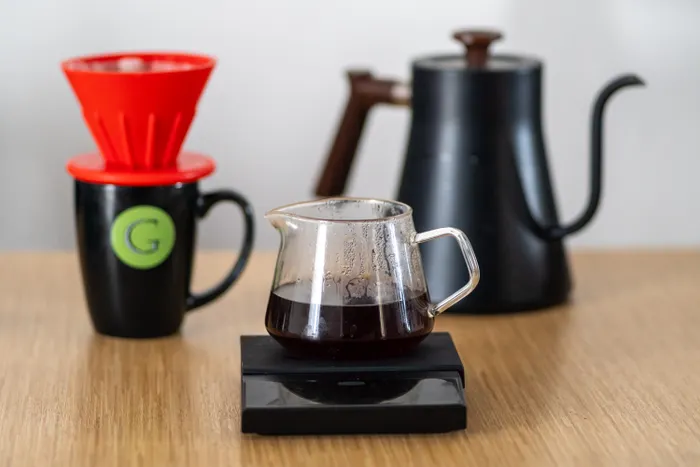
Pour-over coffee rewards attention, but it does not need theatrical pouring or specialized vocabulary. A beginner needs a stable dripper, the correct filter, a consistent coffee-to-water ratio, and a pouring sequence simple enough to repeat. Once those elements are fixed, taste can guide small changes.
Set the dripper on a sturdy vessel and confirm that the combined setup will not tip. Insert the correct filter and rinse it with hot water to remove loose paper flavor and warm the brewer. Discard the rinse water. Add freshly ground coffee at a medium-fine starting setting, then shake the dripper gently to level the bed without compacting it.
Place everything on a scale and tare. Start a timer as the first water touches the grounds. Pour enough water to wet all coffee evenly, then pause briefly while trapped gas escapes. Very fresh coffee may expand visibly; older coffee may show less activity. The purpose is even saturation, not producing the largest possible bloom.
Continue with slow, controlled pours. Use small circles that cover the coffee bed while avoiding repeated pouring directly onto the paper wall. Allow the water level to decline between pulses without letting the grounds dry completely. Keep the total water and overall pouring pattern similar each time. A gooseneck kettle offers control, but a careful pour from another heat-safe kettle can still teach the method.
Observe total drawdown. If water drains extremely quickly and the cup tastes thin or sharply sour, use a finer grind on the next brew. If drainage is very slow and flavor is harsh, bitter, or drying, try coarser. Pouring too aggressively can also disturb fine particles and slow the filter, so keep technique steady before blaming the grinder.
Do not chase a target time without tasting. Two coffees can drain differently because of roast, origin, age, or grinder behavior. Time is a diagnostic observation, not proof that a cup is good. Record coffee dose, water, grind setting, rough brew time, and one or two flavor notes. Adjust only one variable for the next attempt.
Handle hot water deliberately. Keep the kettle cord and handle clear, avoid filling above safe limits, and brew away from the counter edge. Lift the dripper only after dripping slows, and place it on a heat-safe dish. Dispose of grounds after they cool rather than carrying a dripping filter across the kitchen.
Clean the dripper and serving vessel promptly so oils do not accumulate. A repeatable pour-over is built on ordinary habits: level grounds, complete initial wetting, controlled pours, measured total water, and one adjustment at a time. Precision becomes useful when it makes the next cup easier to understand.
Practice pouring with plain hot water before using coffee if kettle control feels awkward. Measure the target water, pour it through an empty rinsed filter in several calm pulses, and note hand position and kettle weight. This does not simulate extraction, but it builds a stable movement without wasting beans. Dry the setup afterward and return to the written coffee recipe rather than inventing a new pattern mid-brew.